Why do truck aprons fail faster than ordinary pavement?
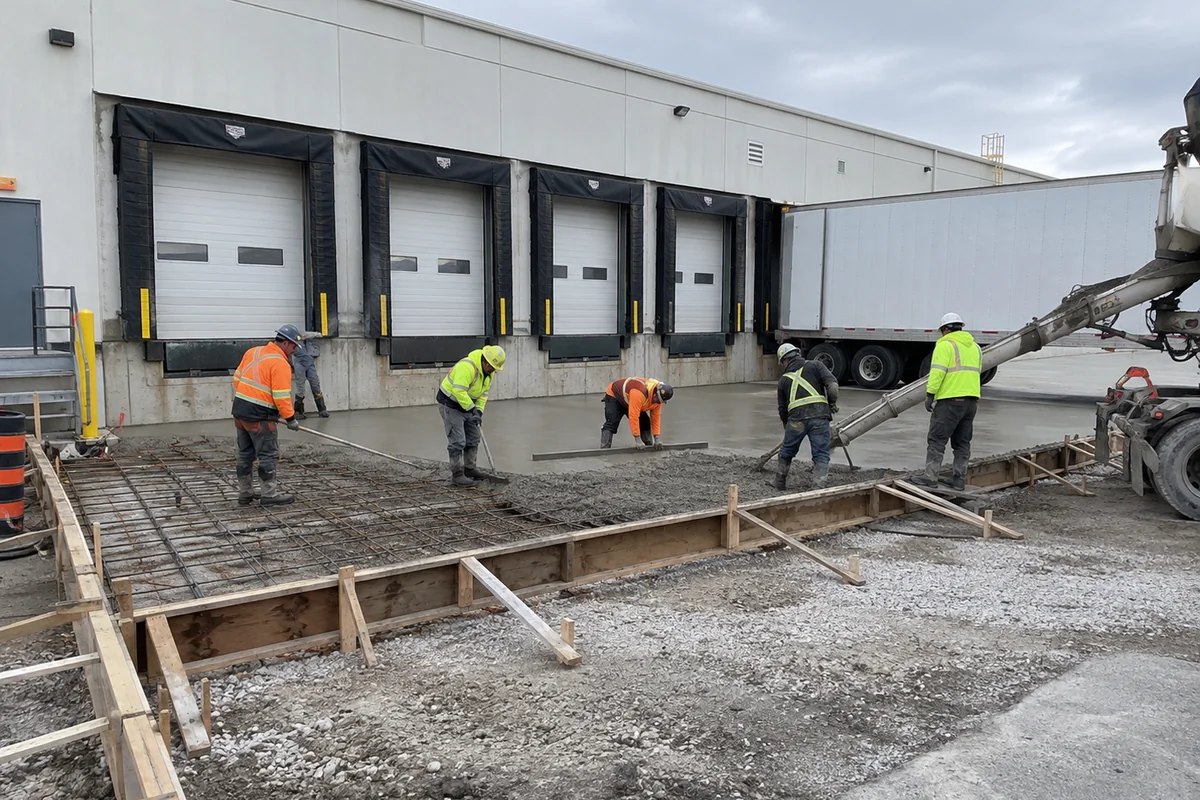
Truck aprons experience slow, heavy wheel loads and sharp turning near dock doors. Those movements produce high stresses that can shove flexible pavement and punish concrete joints, corners, and transitions. Trailers may also rest on landing gear that creates concentrated loads. Water, salt, freeze-thaw exposure, and snow-removal equipment add surface and edge damage. If the base settles or drainage holds water at the dock, cracking and faulting can interfere with safe loading. Design should consider vehicle weights, turning paths, landing-gear zones, dock geometry, subgrade, concrete thickness, reinforcement, load transfer, joints, and the connection to surrounding pavement. A standard sidewalk or driveway detail is not suitable. Delaying repairs allows broken edges to widen and can create impacts for forklifts crossing between the building and trailer. Professional planning uses the operating fleet and approved structural details to build support where trucks actually travel and stand, with transitions that reduce abrupt impacts.
How should loading-area drainage and slopes be planned?
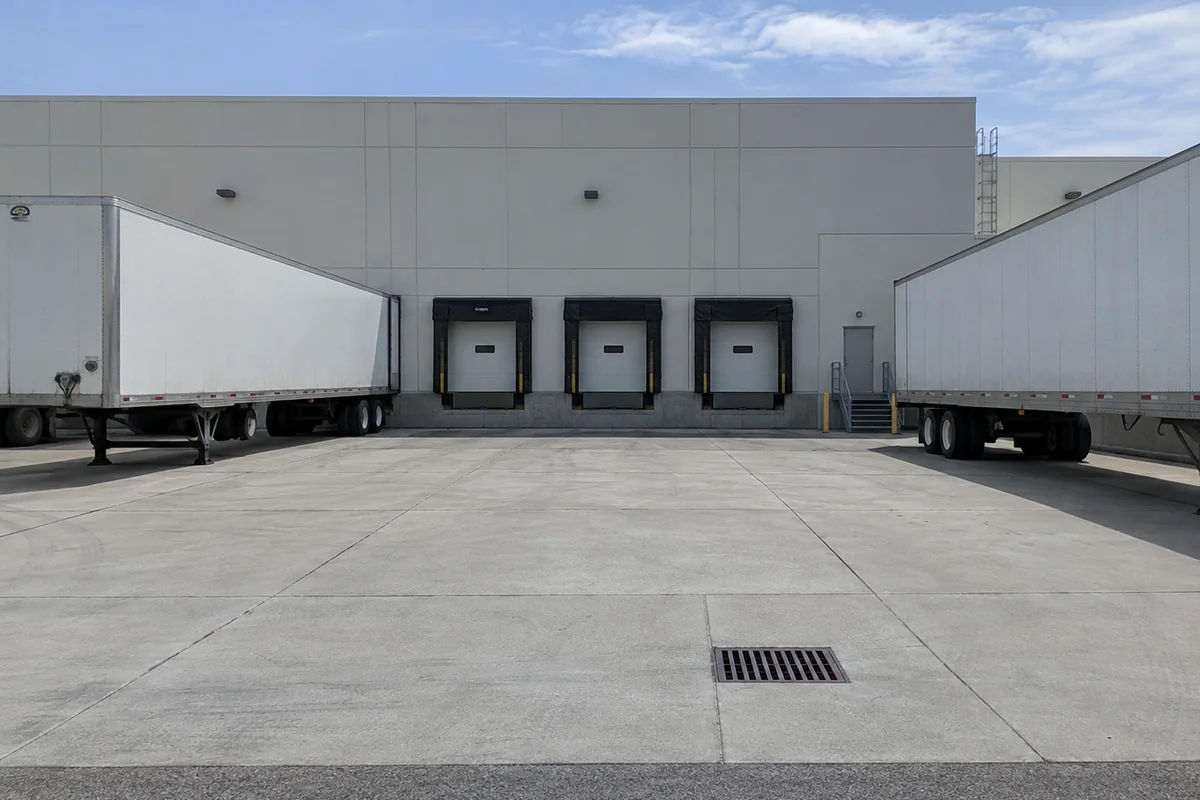
Loading-area drainage must direct water away from dock doors, building walls, pedestrian routes, and low points where ice can form. The finished elevations need to work with dock levellers, trailer approach angles, catch basins, trench drains, curbs, and adjoining asphalt. A slope that looks minor on a drawing can affect trailer clearance or create a difficult forklift transition. Poor drainage also keeps joints wet and increases freeze-thaw and salt exposure. Correct planning starts with a survey or reliable elevations and confirms where water can legally discharge. The concrete team sets forms and grades to the approved plan, while the project team protects drains and checks transitions before placement. Adding a surface patch later rarely corrects a broad elevation problem. Owners should identify winter plowing patterns and any washdown flow as well as rainfall. A coordinated grading plan protects the building, supports safer loading, and reduces standing water that accelerates damage.
Which joints and edges need special attention around loading docks?
Dock areas concentrate traffic at door thresholds, slab transitions, ramp edges, drains, and the line where exterior concrete meets an interior floor or asphalt yard. Joints in these wheel paths need stable support and suitable load transfer. Thickened edges, dowels, armouring, or other engineer-specified details may be appropriate where impacts are severe. Poorly aligned dowels can restrain movement or fail to transfer load, while unfilled openings can collect debris and damage small forklift wheels. Once an edge spalls, repeated crossings enlarge the defect. Joint locations should be coordinated with dock equipment, columns, drains, door frames, and the placing sequence before reinforcement is installed. Timely sawing and suitable sealing or filling follow the approved design and operating environment. Repair work must remove loose concrete and rebuild a durable edge at adequate depth. Careful detailing at transitions often matters more to daily operations than the appearance of the broad slab area.
How can loading dock work be phased around deliveries?
Loading dock work is disruptive because the same doors and routes needed for construction often serve daily deliveries. Phasing begins with a door-use plan, carrier schedule, alternate route, emergency access, pedestrian separation, and the cure time required before trucks return. Temporary plates or detours may be possible in some settings, but they must be designed and used safely. Demolition dust, noise, vibration, and concrete truck movement also affect operations. If a repaired bay opens before the material is ready, the first loaded trailer can damage the work. Owners should identify peak periods, critical shipments, trailer storage, and site-security rules. The contractor can then sequence saw cutting, removal, base repair, reinforcement, placement, curing, joint work, and reopening by bay. A clearly marked closure with one responsible person for release avoids conflicting instructions. Planning around operations protects the new concrete and keeps facility staff from improvising unsafe routes.
When should a damaged truck apron be repaired or fully replaced?
Localized repair may suit an isolated joint, corner, spall, or settlement area when surrounding panels remain structurally sound. Full replacement becomes more practical when slabs have widespread cracking, pumping, rocking, severe scaling, poor thickness, or drainage grades that do not work. Repeated thin patches often break away under turning truck traffic because they do not correct support or load-transfer problems. Assessment should map distress, check elevations and movement, review vehicle patterns, and investigate base and drainage conditions. Cores, test pits, or engineering input may be justified for a large or critical apron. The decision must also consider closure time and how new work will connect to dock and yard elevations. Correct removal protects adjacent concrete and buried services; reconstruction restores the base before placing a properly detailed slab. Choosing repair or replacement from the visible surface alone can underestimate the cause and lead to another shutdown.
Discuss your project
Share the location, scope, timing, and any site conditions that may affect the work.