How is the cause of concrete damage identified?
Concrete damage is diagnosed by looking beyond the visible crack or spall. The assessment considers load paths, traffic, impact, drainage, joint movement, corrosion, freeze-thaw exposure, chemicals, base support, slab thickness, previous repairs, and construction details. Crack width, pattern, elevation change, moisture, rust staining, hollow areas, and movement provide clues. On important slabs, cores, scans, surveys, or engineering review may be useful. A repair selected only by colour or advertised strength can fail if the underlying cause remains. For example, a rigid patch across a moving joint may crack beside the repair, and a thin overlay on weak concrete may delaminate. Delaying investigation allows water, debris, traffic, or corrosion to enlarge the problem. Professional diagnosis defines the repair boundary and whether the correct response is sealing, edge rebuilding, partial-depth repair, full-depth replacement, stabilization, or structural design.
Why does surface preparation control repair bond?
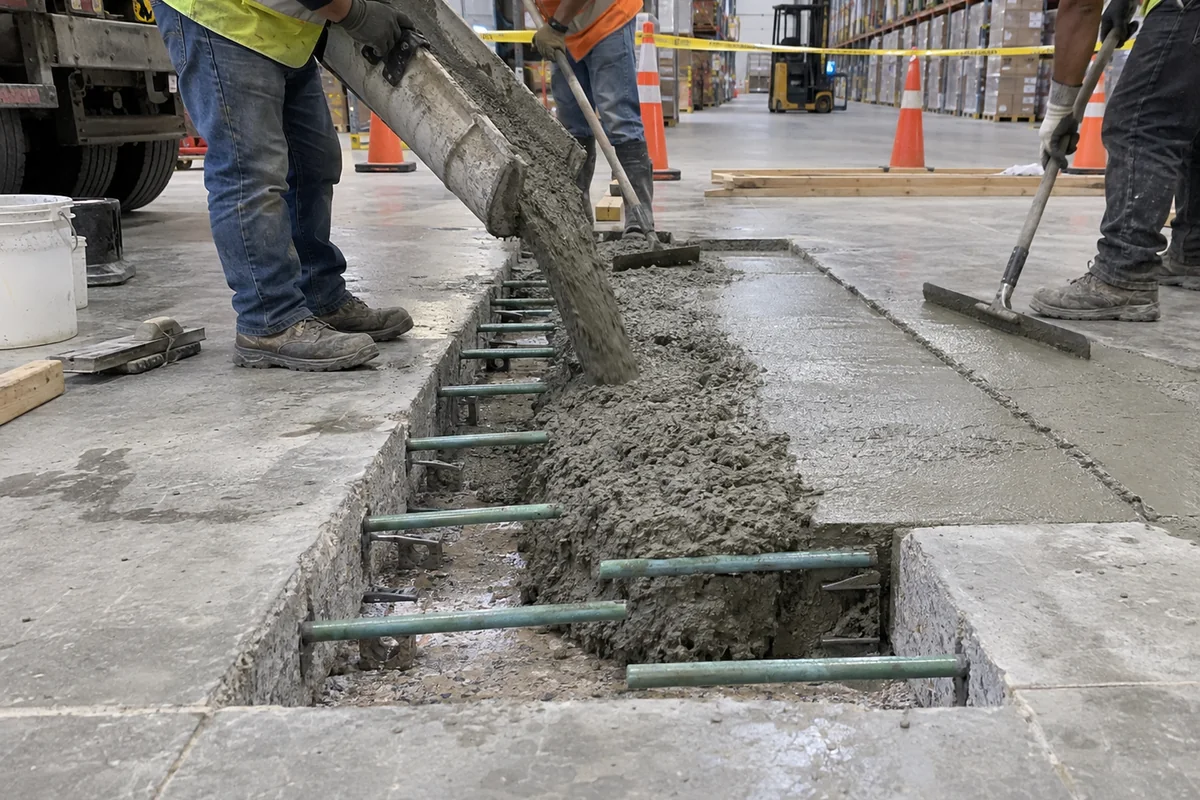
Repair materials bond to sound, clean, properly textured concrete rather than dust, oil, paint, salt, curing compound, or weak paste. Preparation may include saw cutting, chipping, scarifying, grinding, shot blasting, abrasive cleaning, and removal around corroded reinforcement. The method must avoid microcracking or damaging concrete that is intended to remain. Edges usually need adequate depth instead of feathering to nothing. After removal, the cavity is cleaned and conditioned as the material manufacturer and project specification require. Skipping preparation saves time only until the repair lifts or breaks under traffic. Moisture and temperature at placement also affect bond and curing. Professional repair work matches preparation to the product and exposure, checks the substrate before mixing, and keeps contaminants out of the repair zone. The existing concrete is part of the new assembly; if it is not stable, even a high-strength material has nothing dependable to hold onto.
How are repair materials selected for industrial traffic?
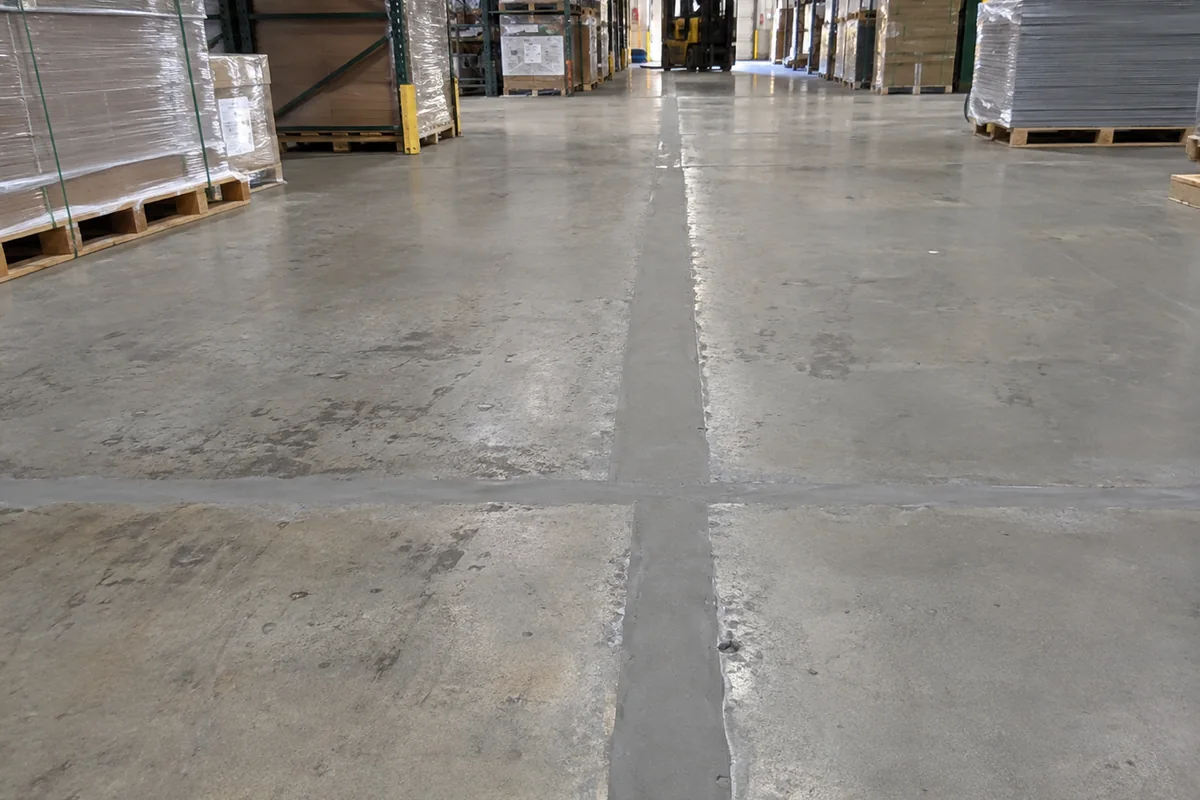
Industrial repair materials are selected for depth, load, impact, movement, chemical exposure, temperature, placement size, cure time, and compatibility with the existing concrete. Very rapid strength can help reopen a critical aisle, but short working time increases placement risk and does not guarantee durability. A low-modulus joint material serves a different purpose from a structural patch. Some products require dry concrete, primers, aggregate extension, or precise water measurement. Shrinkage, thermal behaviour, and bond matter as much as compressive strength. Owners should provide traffic type, wheel loads, cleaning chemicals, operating temperature, and the closure window. The repair design then identifies preparation, reinforcement treatment, dowels, joint restoration, curing, and release criteria. Choosing the fastest product without enough time to prepare and cure can cause another failure. A balanced selection supports both the facility schedule and the mechanical demands at the repaired location.
When should damaged concrete be replaced instead of patched?
Replacement is usually preferable when damage is widespread, the slab has inadequate thickness, panels rock or settle, reinforcement corrosion extends beyond a small area, drainage is broadly wrong, or previous patches keep failing. Patching can be economical for isolated defects where surrounding concrete and support remain sound. The decision compares total repair area, access, shutdowns, expected life, load needs, and whether replacement can correct the cause. A cosmetic topping does not restore a failed base. Likewise, repeated edge patches may cost more over time than rebuilding a traffic lane with proper joints and load transfer. The contractor should show the proposed limits and explain what will remain. Structural concerns may require an engineer. Honest repair-versus-replacement advice helps owners direct capital to a solution that fits the condition rather than purchasing the lowest immediate intervention.
How is repair work phased inside an operating facility?
Repair phasing maps the defect locations against forklift routes, exits, production lines, sanitation zones, and delivery schedules. Work areas need dust control, barricades, ventilation where products require it, and safe detours. Saw cutting and removal may create vibration or expose utilities, while mixing and curing require controlled temperatures. Each phase should be small enough to protect operations but large enough for correct preparation and efficient placement. The return-to-service time is based on material data, site temperature, repair depth, and required strength, not only the clock. If staff cross a repair early, edges and bond can be damaged. A written plan identifies closure, inspection, placement, curing, testing if required, cleanup, and reopening authority. This lets facility managers coordinate production while the concrete team completes a durable repair instead of rushing a series of emergency patches.
Discuss your project
Share the location, scope, timing, and any site conditions that may affect the work.